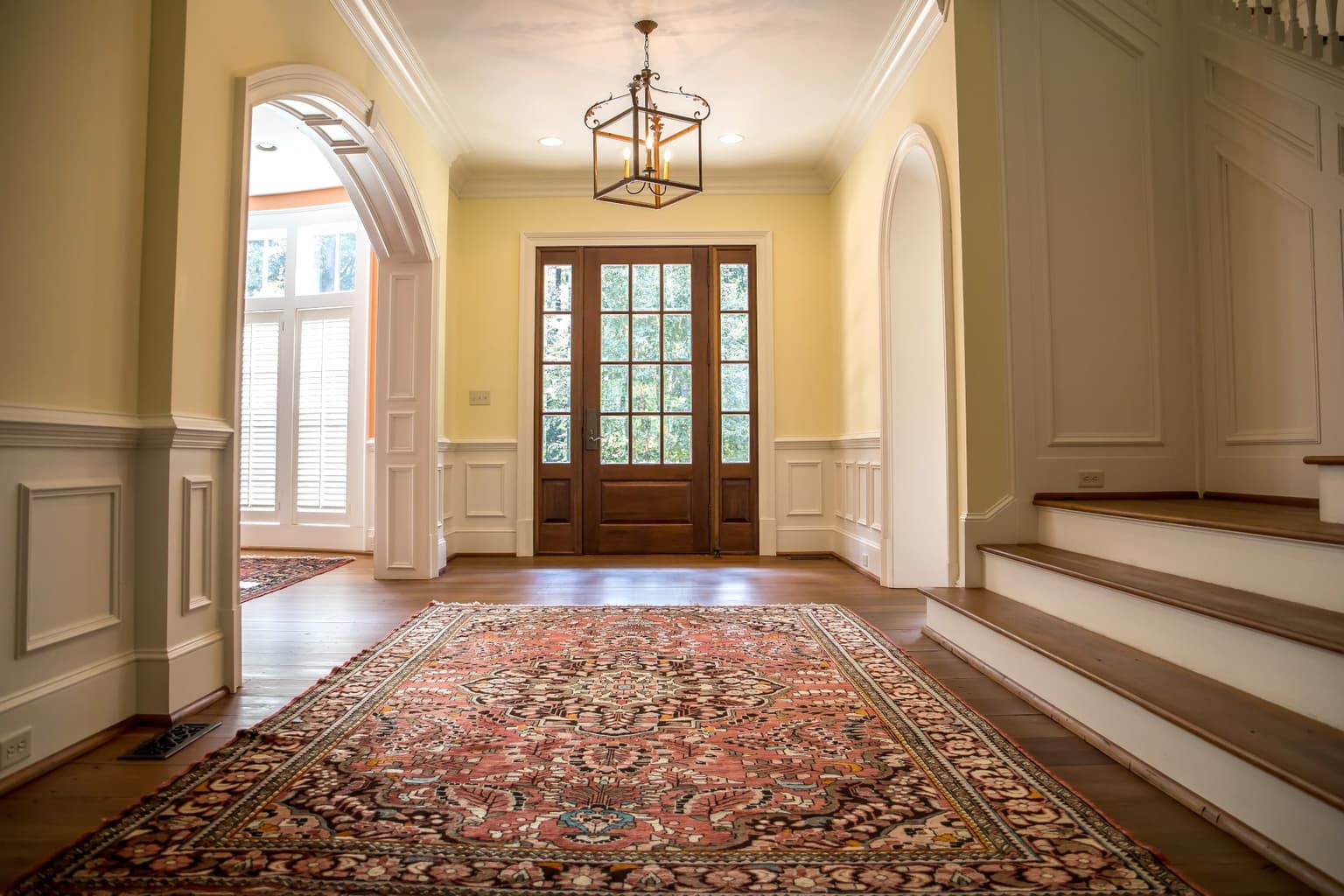
For a lot of families an Oriental rug is the single most valuable thing on the floor, sometimes worth more than the furniture sitting on top of it. One wrong cleaning can fade the dyes, shrink the wool, or weaken the foundation, and there's no taking that back. Our Lebanon team cleans Oriental rugs with a soap-free, low-moisture carbonated method that pulls out deep soil and odor while leaving the color, the texture, and the structure of the rug intact.
We've worked with delicate textiles for more than 30 years, and this method was built for exactly this kind of rug. No flood of water to bleed the dyes. No detergent to lodge in the natural fibers. No heat to shrink the wool or strain the silk.
The Safe-Dry® Oriental rug cleaning process
1. Material and construction review. We start by sorting out what we're dealing with. Wool, silk, cotton, or a blend. Hand-knotted, hand-tufted, or machine-made. We note the dye type, since older vegetable dyes move more readily than modern synthetics, and we run a colorfastness test in a tucked-away corner. A 1950s piece with natural dyes gets a very different hand than a new production rug.
2. Foundation dusting. The grit you can't see does the most harm. A rug walked on for a year or two can hold pounds of fine soil compacted into the base of the pile, and a household vacuum never reaches it. We use dusting equipment to shake that debris loose and lift it out before any moisture touches the rug. This one step heads off a lot of the slow fiber wear that adds up over the years.
3. Spot and stain work. Visible stains, worn traffic marks, and pet spots each get individual attention. We apply hypoallergenic pre-treatment made for natural fiber, and pet odor areas get enzyme formulas that break the organic contamination apart at the source.
4. Carbonated clean. Millions of tiny bubbles work into the pile, attach to the soil, and carry it up to the surface for extraction. No soap, no detergent, no film left behind. The process runs on about a tenth of the water steam cleaning needs, and for wool, silk, and natural-dye rugs, that low moisture is the line between a clean rug and a ruined one.
5. Wool-safe rinse and extraction. A gentle rinse clears the last of the impurities, and strong extraction pulls the moisture back out quickly. That's why dry times stay short and the mold risk stays near zero.
6. Protection and grooming. We can lay down an optional fiber protector that guards against the next stain without changing how the rug feels or looks, then groom the pile so it all sits even.
7. Final review. We go over the work with you side by side. For pieces we take in for deeper processing, we run the same walkthrough at delivery.
Why Oriental rugs need specialized care
A well-made Oriental rug can pass from one generation to the next, and how long it lasts comes down to how it's looked after in between. Dust, dander, and pollen settle into the pile every day, and foot traffic drives those particles deeper into the wool. Month after month, the trapped grit dulls the colors and saws at the fibers from the inside. A proper cleaning lifts that material out before the damage turns visible and permanent.
There's a health side too. Rugs act as passive filters, holding allergens that would otherwise float through the room. Once a rug fills up, every footstep pushes some of those particles back into the air. In a Lebanon home where somebody fights allergies or asthma, a dirty rug quietly works against the air you're trying to keep clean.
Our process guards the rug while it cleans. Minimal water means no shrinking. No detergent means no color bleed and no leftover film to attract new soil. No harsh chemistry means the wool and silk keep their strength and their softness for years.
Why Lebanon families trust us with their rugs
Our technicians are certified, insured, background-checked, and trained specifically on delicate natural-fiber textiles. They bring wool-safe products to every job. Families around Wilson County hand us rugs that carry real sentimental and dollar value because the method is built to be gentle before anything else.
Every job carries our 100% satisfaction guarantee. If the rug doesn't look right, we come back.
What makes our approach different
Stays cleaner longer. With no soap residue in the fibers, there's nothing to grab fresh dirt. Rugs we clean hold their look up to four times longer between visits.
Dry in about an hour. Low-moisture carbonation dries up to eight times faster than hot-water methods, so an in-home cleaning usually has the rug ready within the hour.
Fully guaranteed. Backed by our 100% satisfaction promise on every job.
Most Oriental rugs can be cleaned right in your home. For pieces that need deeper restoration, heavy stain work, or fringe repair, we offer drop-off service with pickup and delivery, usually a two-to-five business day turnaround depending on condition. Either way, you don't have to wrestle the rug into your car. We serve Lebanon, Mt. Juliet, Watertown, Gladeville, Statesville, Norene, and Tuckers Crossroads. If you're also looking at carpet cleaning or upholstery cleaning, we can bundle them on the same visit. Ask about the $88 for three rooms deal when you book.
Frequently asked questions
How long does it take to clean an Oriental rug? In-home service runs one to two hours depending on size and soil level, and the rug dries in about an hour after. For pieces that need deeper processing or repair, turnaround is usually two to five business days.
Is your process safe for wool and silk rugs? Yes. Our solutions are non-toxic, hypoallergenic, and free of soap and harsh chemicals. The low-moisture carbonated method was built to be safe for natural fibers. We test colorfastness first and use wool-safe rinse formulas.
How often should an Oriental rug be cleaned? Every 12 to 18 months for most homes. Households with pets or young kids may want every six to nine months. Steady maintenance protects the color and keeps allergens from packing deep into the pile.
Why shouldn't I steam clean my Oriental rug? Steam cleaning forces a lot of hot water and detergent into the rug, which can bleed natural dyes, shrink the wool foundation, and leave residue that pulls in new dirt. Our method uses a fraction of the water and no soap at all.
Can you get pet stains and odor out of an Oriental rug? Yes. Our enzyme and oxidizer treatments target the organic contamination at the source, and for urine that's reached the backing, subsurface extraction pulls it out from below. Everything we use is safe for natural fibers and dyes.
Will the colors bleed during cleaning? We test for colorfastness before starting, and the low-moisture process plus the absence of detergent keeps dye migration risk low. If a rug tests with unstable dyes, we adjust the method or recommend off-site treatment where we have more control.
How do I schedule or get a price? Call us or request an appointment through the website. A technician inspects the rug, walks you through what to expect, and gives you a written price before any work begins.
Book your cleaning
Call 615-994-1780 or request a quote online. We serve Lebanon, Mt. Juliet, Watertown, Gladeville, Statesville, and the rest of Wilson County. Not sure whether your rug needs in-home or off-site service? Describe it when you call and we'll point you the right way. Ready now? Use our online scheduler, and see the coupons page for current offers.